









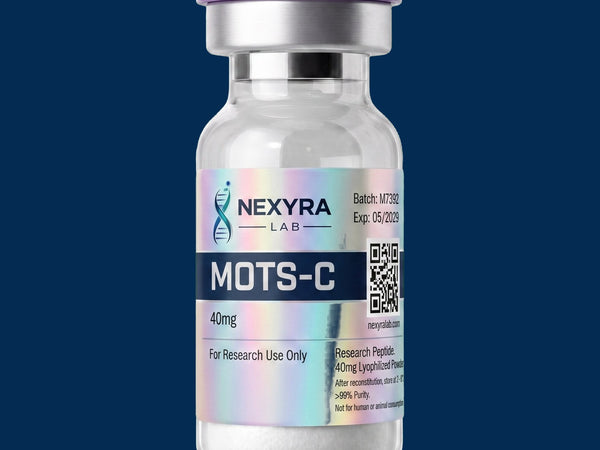










MOTS-c Peptide: Unpacking the Science Behind Mitochondrial Signaling and Therapeutic Potential
Recent analyses and reviews are shedding light on MOTS-c, a mitochondrial-derived peptide with emerging therapeutic applications. While research highlights its potential in metabolic regulation, stress adaptation, and even longevity, current human data remains limited, prompting caution regarding its widespread use.
Key Takeaways
- MOTS-c is a 16-amino acid peptide encoded by mitochondrial DNA, playing a role in metabolic homeostasis and cellular communication.
- Early research suggests potential benefits for conditions like diabetes, obesity, and cardiovascular disease, as well as in delaying aging.
- The peptide acts as an "exercise mimetic," triggering metabolic adaptations similar to physical activity.
- Despite promising preclinical and some human biomarker studies, large-scale, controlled human trials are lacking.
- Regulatory bodies like the FDA have flagged MOTS-c for potential safety risks, including immunogenicity and impurities, and it is banned by anti-doping agencies.
Understanding MOTS-c: Origin and Function
MOTS-c, a peptide originating from the mitochondrial genome, is distinct from peptides derived from nuclear DNA. It is believed to act as a signaling molecule, facilitating communication between mitochondria and the rest of the cell, particularly during metabolic stress. Research indicates that MOTS-c can activate pathways like AMPK, which are crucial for regulating glucose metabolism, insulin sensitivity, and energy balance.
Therapeutic Potential and Research Findings
Studies suggest MOTS-c may offer therapeutic benefits for a range of conditions. Its ability to improve glucose metabolism in skeletal muscle points to potential applications in managing diabetes and obesity. Furthermore, research has explored its role in cardiovascular health and its association with longevity, with levels declining with age.
Animal studies have demonstrated that MOTS-c can prevent diet-induced obesity and improve glucose tolerance. It is also noted for its potential to enhance exercise performance and adaptation, as human studies have shown that exercise naturally increases MOTS-c levels.
The Evidence Ladder: From Lab to Clinic
Evaluating the scientific claims surrounding MOTS-c requires understanding the 'evidence ladder.' Basic biology and animal studies form the base, with MOTS-c well-established at this level. Early human studies, often observing naturally occurring levels in response to stimuli like exercise, represent the next rung. However, large-scale randomized controlled trials, the gold standard for proving safety and efficacy, are largely absent for MOTS-c.
Regulatory Scrutiny and Safety Concerns
Despite its potential, MOTS-c, like other experimental peptides such as BPC-157, has been flagged by regulatory agencies. The U.S. Food and Drug Administration (FDA) has listed MOTS-c as a bulk drug substance that may present significant safety risks, citing concerns about potential immunogenicity, impurities, and a lack of comprehensive human exposure data. Consequently, anti-doping agencies like the U.S. Anti-Doping Agency (USADA) prohibit its use due to its pharmacological activity and unapproved status.
Navigating the Hype Pipeline
The journey of peptides like MOTS-c from preclinical research to consumer interest often involves a rapid progression through blogs and social media, sometimes outpacing robust clinical validation. Experts advise a disciplined approach, emphasizing verification of regulatory status, analysis of evidence levels, and distinguishing biomarkers from proven clinical outcomes.
Future Directions
Ongoing research aims to further elucidate the molecular mechanisms and therapeutic potential of MOTS-c. The development of analogs and the exploration of synthetic biology approaches for its application are areas of active investigation. However, the critical need for large-scale human trials remains to establish definitive safety and efficacy for therapeutic use.
Conclusion
MOTS-c represents a fascinating area of research in mitochondrial signaling and metabolic health. While early findings are promising, the current lack of extensive human clinical data and regulatory concerns necessitate a cautious approach. Disciplined curiosity guided by transparent evidence is key to understanding its true therapeutic value.
Sources
- Should You Try MOTS-c and BPC-157 Longevity Peptides? Separating Truth from Hype with Human Data Studies, Intelligent Living.
- MOTS-c: A promising mitochondrial-derived peptide for therapeutic exploitation, Frontiers.
- MOTS-c Peptide and Its Role in Metabolic Health, Social Life Magazine.
- Metabolic Intelligence and Adaptive Stress Coordination – Indian Television Dot Com, Indian Television Dot Com.
- FDA mulls compounding for peptides previously flagged over safety risks, BioSpace.