

1 / 1


1 / 1







Description
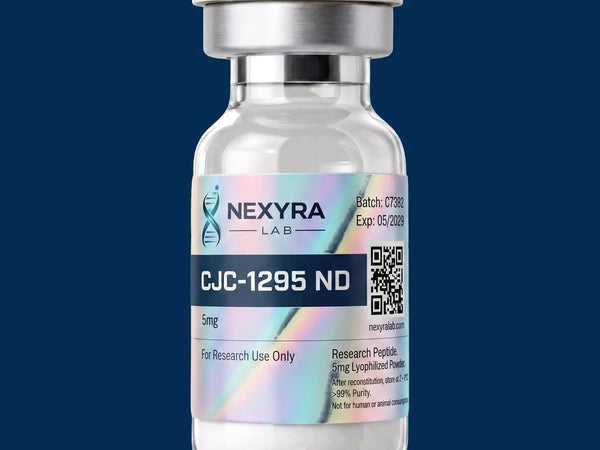
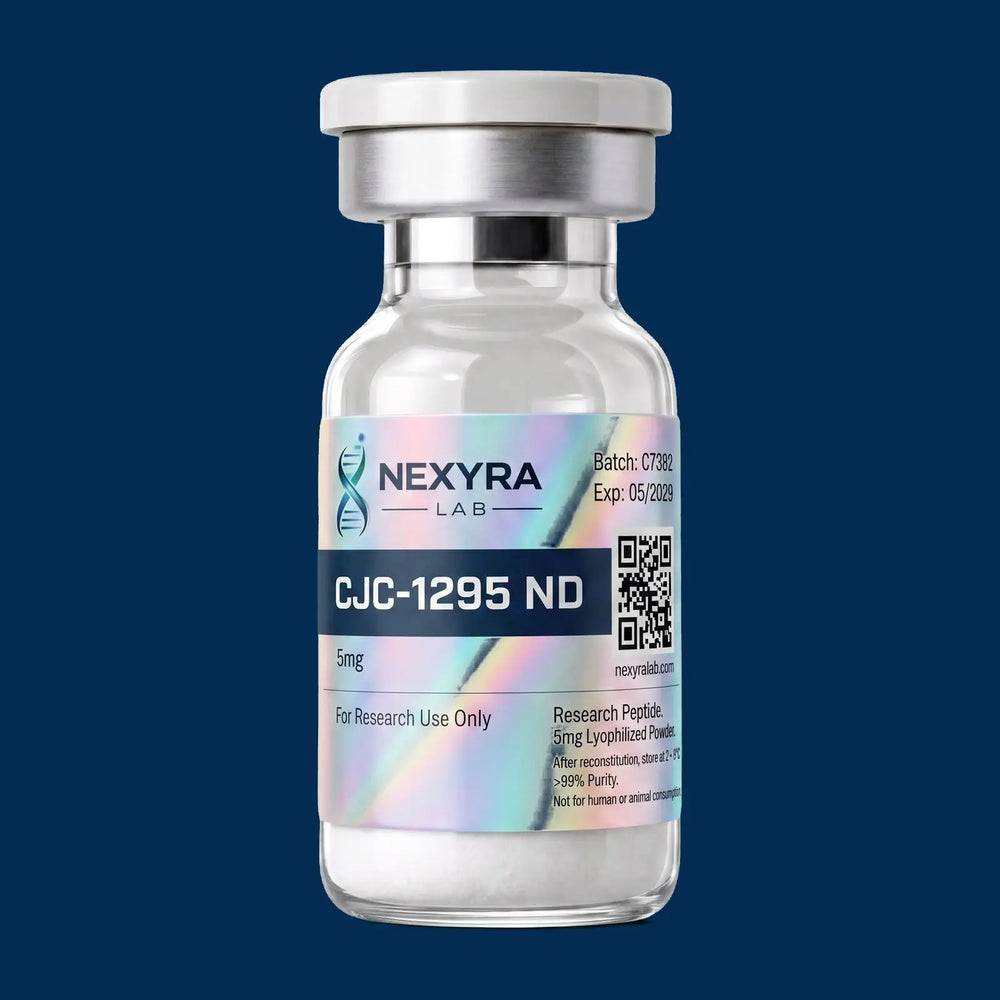
xCJC-1295 No DAC | Modified GRF (1-29) | Tetrasubstituted GHRH Analogue | Research Peptide
Also Known As: Modified GRF (1-29), Mod GRF 1-29, CJC-1295 without DAC, tetrasubstituted GRF (1-29) Sequence: Tyr-D-Ala-Asp-Ala-Ile-Phe-Thr-Gln-Ser-Tyr-Arg-Lys-Val-Leu-Ala-Gln-Leu-Ser-Ala-Arg-Lys-Leu-Leu-Gln-Asp-Ile-Leu-Ser-Arg-NH₂ Molecular Formula: C₁₅₂H₂₅₂N₄₄O₄₂ Molecular Weight: 3367.97 g/mol Key Substitutions: D-Ala² | Gln⁸ | Ala¹⁵ | Leu²⁷ (tetrasubstituted) Purity: >99% (HPLC verified) Form: Lyophilised powder Available Sizes: 5mg | 10mg Storage: –20°C, away from light and moisture CAS Number: 863288-34-0
What Is CJC-1295 No DAC?
CJC-1295 No DAC — formally known as Modified GRF (1-29), and sometimes abbreviated Mod GRF 1-29 — is a synthetic 29-amino acid analogue of endogenous growth hormone-releasing hormone (GHRH), engineered to deliver enhanced metabolic stability and sustained GHRH receptor activity while preserving the physiologically important pulsatile pattern of growth hormone secretion.
To understand CJC-1295 No DAC, it helps to understand the problem it was designed to solve. Endogenous GHRH is a 44-amino acid hypothalamic peptide that triggers GH release from anterior pituitary somatotrophs. However, the native molecule is rapidly degraded in circulation — primarily by the serum enzyme dipeptidyl peptidase-4 (DPP-4), which cleaves at the Tyr-Ala bond at the N-terminus — resulting in a biological half-life of just two to seven minutes. This extreme brevity makes native GHRH largely impractical as a sustained research tool.
The first step toward a solution was GRF (1-29), also known as sermorelin — a truncated 29-amino acid fragment of GHRH that retains full receptor binding and biological activity, as the first 29 residues contain the complete pharmacophore for GHRH receptor activation. Modified GRF (1-29) — CJC-1295 No DAC — takes this a step further through four targeted amino acid substitutions at positions 2, 8, 15, and 27 of the GRF (1-29) sequence:
- Position 2: L-alanine → D-alanine — provides primary protection against DPP-4 enzymatic cleavage at the N-terminus
- Position 8: Asparagine → Glutamine — reduces oxidative instability during manufacture and storage
- Position 15: Glycine → Alanine — enhances structural rigidity and reduces conformational susceptibility to peptidase activity
- Position 27: Methionine → Leucine — eliminates a methionine oxidation site, significantly improving chemical stability
These four substitutions collectively elevate the half-life of Modified GRF (1-29) from the two-to-seven minute range of native GHRH to approximately 30 minutes — long enough to produce a meaningful GH secretory pulse while remaining short enough to preserve the physiologically important pulsatile pattern of GH release and maintain hypothalamic-pituitary feedback regulation.
A critical nomenclature note for researchers: The term "CJC-1295" in the scientific literature formally refers to CJC-1295 DAC — the albumin-binding, long-acting form of the compound developed by ConjuChem Biotechnologies, which carries an additional Drug Affinity Complex (DAC) modification enabling covalent binding to serum albumin and producing a half-life of approximately six to eight days. "CJC-1295 No DAC" or "CJC-1295 without DAC" is a widely used commercial synonym for Modified GRF (1-29) — and while this nomenclature is ubiquitous in the research peptide community, it is important for researchers to recognise that these are pharmacologically distinct compounds with substantially different pharmacokinetic profiles and experimental implications.
Our CJC-1295 No DAC is synthesised under strict quality-controlled manufacturing conditions and verified to a purity of greater than 99% by HPLC and Mass Spectrometry. It is supplied as a lyophilised (freeze-dried) powder for maximum stability.
Research Background & Scientific Interest
CJC-1295 No DAC (Modified GRF 1-29) has been studied as a GHRH-axis research tool in the context of growth hormone secretion, GH/IGF-1 axis biology, metabolic regulation, body composition, and somatopause research. Its primary scientific value lies in its ability to amplify physiological pulsatile GH secretion — making it a valuable tool for researchers seeking to study the effects of GHRH receptor activation and downstream GH/IGF-1 signalling under conditions that preserve normal hormonal feedback architecture.
GHRH Receptor Activation & Pulsatile GH Secretion CJC-1295 No DAC binds with high affinity to the GHRH receptor (GHRH-R) — a class B G protein-coupled receptor expressed on somatotroph cells of the anterior pituitary. Receptor binding activates the adenylate cyclase–cAMP–PKA intracellular signalling cascade, stimulating both acute GH secretion and GH gene transcription. Because the compound's half-life of approximately 30 minutes is short relative to the natural inter-pulse interval of GH secretion (typically 90–180 minutes), CJC-1295 No DAC produces discrete GH pulses that mimic the physiological secretory pattern rather than creating sustained GH elevation. This pulsatile character is considered experimentally important: the liver and peripheral tissues respond differently to pulsatile versus continuous GH exposure, and several of GH's anabolic and lipolytic effects are specifically dependent on the pulse pattern rather than mean concentration. Researchers studying the distinction between physiological and pharmacological GH signalling will find this a meaningful design consideration in protocol selection.
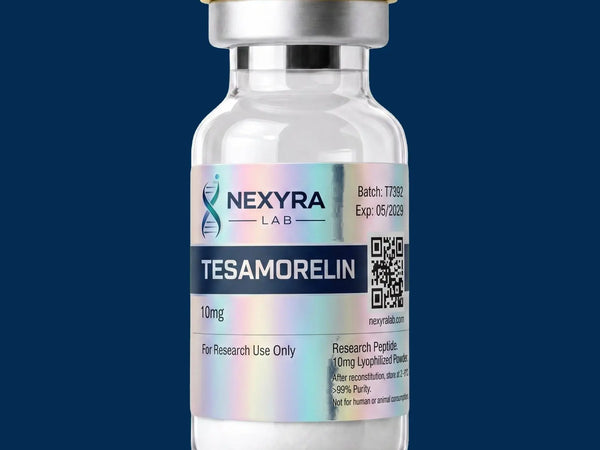
CJC-1295 No DAC vs. Tesamorelin: Pharmacokinetic Research Design Considerations Both CJC-1295 No DAC and tesamorelin are stabilised GHRH analogues that act at the GHRH receptor to stimulate pulsatile GH secretion — and they are frequently compared by researchers selecting between them. The key differences are structural and pharmacokinetic. Tesamorelin is a 44-amino acid analogue of full-length GHRH, stabilised by an N-terminal trans-3-hexenoic acid modification and carrying a half-life of approximately 30–40 minutes. CJC-1295 No DAC is a tetrasubstituted 29-amino acid fragment with a half-life of approximately 30 minutes. Both produce physiologically comparable pulsatile GH release patterns and preserve feedback regulation. Tesamorelin carries the more extensive clinical validation dataset — including FDA approval and large Phase III trial data — while CJC-1295 No DAC is more widely used as a general-purpose GHRH-axis research tool given its broader availability and established use in the preclinical literature. Both are available in our catalogue, allowing researchers to select the most appropriate compound for their experimental model. Tesamorelin is generally preferred when clinical translatability or regulatory alignment is a research priority; CJC-1295 No DAC is appropriate for preclinical mechanistic studies of the GHRH-GH-IGF-1 axis.
CJC-1295 No DAC vs. CJC-1295 DAC: Key Research Design Distinction The choice between CJC-1295 No DAC and CJC-1295 DAC is one of the most consequential protocol decisions in GHRH-axis research, yet it is frequently confused — including, as noted above, in some published scientific literature. CJC-1295 No DAC produces a ~30 minute half-life with discrete pulsatile GH secretion. CJC-1295 DAC — through its albumin-binding Drug Affinity Complex — achieves a half-life of approximately six to eight days, producing sustained GH elevation across a prolonged period and blunting the natural pulse architecture. These are fundamentally different experimental conditions. Researchers studying physiological GH pulsatility, natural feedback dynamics, or acute GHRH receptor pharmacology should use CJC-1295 No DAC. Researchers studying the effects of sustained GH elevation, or requiring a long-acting dosing interval, should use CJC-1295 DAC. Using the wrong compound for the experimental question is a meaningful source of variability and potential error in GH-axis research design.
GH/IGF-1 Axis & Anabolic Signalling Research As a GHRH receptor agonist, CJC-1295 No DAC elevates GH secretion, which in turn drives hepatic and peripheral IGF-1 production. IGF-1 — acting through the IGF-1 receptor and downstream PI3K–Akt–mTOR and MAPK signalling cascades — mediates the principal anabolic, growth-promoting, and tissue-remodelling effects of the GH/IGF-1 axis. Preclinical research has examined CJC-1295 No DAC (and related GHRH analogues) in models of skeletal muscle protein synthesis, lean mass accretion, adipose tissue lipolysis, bone mineral density, and collagen synthesis — with IGF-1 elevation identified as the primary mediator of these downstream effects.
Metabolic & Body Composition Research Growth hormone directly stimulates lipolysis in adipose tissue via hormone-sensitive lipase activation, and indirectly promotes lean mass accrual through IGF-1-mediated protein synthesis and nitrogen retention. CJC-1295 No DAC's amplification of pulsatile GH secretion has made it a useful tool in preclinical studies examining these metabolic effects, including models of age-related body composition change and GH deficiency states. The compound's preservation of pulsatile GH dynamics is particularly relevant in this context, as the lipolytic effects of GH are known to be pulse-amplitude-dependent.
Somatopause & Ageing Research The progressive decline in GHRH output and GH pulsatility with age — somatopause — produces a characteristic pattern of metabolic deterioration including increased visceral adiposity, reduced lean mass, and impaired tissue repair capacity. CJC-1295 No DAC, as a tool for restoring GHRH receptor stimulation and augmenting pulsatile GH output, has been studied in preclinical models of somatopause-associated metabolic change. Its mechanism of action — upstream stimulation of pituitary GH secretion rather than exogenous GH replacement — preserves the regulatory architecture of the hypothalamic-pituitary axis, making it a pharmacologically distinct tool from direct rhGH administration in ageing research models.
Combination Research with GHRPs CJC-1295 No DAC is frequently studied in combination with growth hormone-releasing peptides (GHRPs) — including ipamorelin, GHRP-2, and GHRP-6 — in preclinical research protocols. GHRPs act at the ghrelin receptor (GHSR-1a) to amplify GH secretion through a distinct and mechanistically complementary pathway from GHRH receptor activation. The combination of a GHRH analogue (CJC-1295 No DAC) with a GHRP is known to produce synergistic GH release substantially exceeding the effect of either compound alone — a finding consistent with the known synergistic relationship between the GHRH and ghrelin pathways in regulating pituitary GH secretion. This combination approach has become one of the most common experimental paradigms in preclinical GH-axis research and is an important consideration for researchers designing multi-peptide studies.
Product Specifications
| Specification | Detail |
|---|---|
| Peptide | CJC-1295 No DAC (Modified GRF 1-29) |
| Also Known As | Mod GRF 1-29, Modified GRF (1-29), CJC-1295 without DAC |
| Sequence | Tyr-D-Ala-Asp-Ala-Ile-Phe-Thr-Gln-Ser-Tyr-Arg-Lys-Val-Leu-Ala-Gln-Leu-Ser-Ala-Arg-Lys-Leu-Leu-Gln-Asp-Ile-Leu-Ser-Arg-NH₂ |
| Key Substitutions | D-Ala² / Gln⁸ / Ala¹⁵ / Leu²⁷ |
| Molecular Formula | C₁₅₂H₂₅₂N₄₄O₄₂ |
| Molecular Weight | 3367.97 g/mol |
| Purity | >99% (HPLC & MS verified) |
| Form | Lyophilised powder |
| Vial Sizes | 5mg, 10mg |
| Appearance | White to off-white powder |
| Solubility | Soluble in sterile bacteriostatic water or PBS |
| Approximate Half-Life | ~30 minutes |
| Storage | –20°C, keep away from light |
| Shelf Life | 24 months when stored correctly (lyophilised) |
| CAS Number | 863288-34-0 |
Quality & Purity Assurance
Every batch of our CJC-1295 No DAC undergoes a rigorous multi-stage quality control process before release. Our assurance pipeline includes:
- HPLC Analysis — confirms peptide purity exceeding 99%
- Mass Spectrometry (MS) — verifies molecular identity, correct tetrasubstitution pattern, and full 29-residue sequence accuracy
- Endotoxin Testing — ensures the product is free from bacterial endotoxins
- Certificate of Analysis (CoA) — available for every batch upon request
Full batch traceability is maintained across synthesis, purification, and quality testing. The four amino acid substitutions are analytically critical features of Modified GRF (1-29) — our MS verification process explicitly confirms the correct substitution pattern to distinguish it from native GRF (1-29) or sermorelin, and to ensure research-grade accuracy.
Handling & Reconstitution (Research Use)
CJC-1295 No DAC lyophilised powder should be reconstituted using sterile bacteriostatic water. Inject the water slowly against the side of the vial — not directly onto the powder — and swirl gently until fully dissolved. Do not vortex. Once reconstituted, aliquot and store at 2–8°C. Use within 28–30 days of reconstitution. Avoid repeated freeze-thaw cycles to preserve peptide integrity.
All handling should comply with standard laboratory safety protocols and applicable institutional or regulatory guidelines.
CJC-1295 No DAC Within the Research Peptide Catalogue
CJC-1295 No DAC occupies the GHRH secretagogue position within our GH-axis research toolkit. Together with tesamorelin (a 44-residue GHRH analogue with FDA validation) and recombinant human growth hormone (rhGH, the direct GH replacement standard), it provides researchers with three mechanistically distinct points of entry into GH/IGF-1 axis research: upstream GHRH stimulation with pulsatile GH output (CJC-1295 No DAC and tesamorelin), and direct exogenous GH replacement (rhGH).
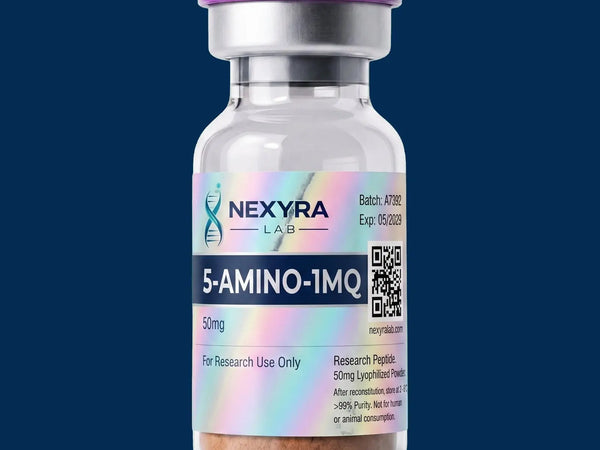
Within the broader catalogue, CJC-1295 No DAC's GH/IGF-1 axis effects are mechanistically distinct from — and complementary to — the tissue-repair focus of BPC-157 and TB-500, the dermal and genomic biology of GHK-Cu, the mitochondrial metabolic signalling of MOTS-c, the systemic hormonal triple agonism of retatrutide, the intracellular NAD+ axis of 5-Amino-1MQ, and the neuropeptide biology of Selank. Together, these compounds represent a catalogue spanning the most actively researched peptide mechanisms in contemporary preclinical science.
All peptides are manufactured to the same >99% purity standard and supported by batch-specific Certificates of Analysis.
Important Notice
This product is intended strictly for in vitro research and laboratory use only. CJC-1295 No DAC (Modified GRF 1-29) is not approved for human or veterinary use by the FDA, EMA, or any other regulatory authority. It is not a drug, supplement, or food product. This product must not be administered to humans or animals. By purchasing this product, the buyer confirms they are a qualified researcher and will use the compound solely for lawful scientific research purposes.
Shipping and Returns
xReturn & Refund Policy
We take pride in delivering high-quality research peptides and want every order to meet your expectations. Please take a moment to review our policy before completing your purchase.
Research Use Only
All products are strictly intended for laboratory and in-vitro research purposes. They are not formulated or approved for human consumption, veterinary use, or diagnostic application.
All Sales Are Final
Due to the sensitive and regulated nature of our products, all sales are final. We are unable to accept returns, process exchanges, or issue refunds once an order has been confirmed.
Order Accuracy
Please review your order carefully before submitting. We are committed to fulfilling every order exactly as placed and cannot assume responsibility for errors entered at checkout.
Damaged or Incorrect Orders
We stand behind every shipment we send. In the unlikely event that your order arrives damaged or contains an incorrect item, contact our team within 48 hours of delivery. Each case will be reviewed individually, and resolutions are offered at our discretion.
Your Acknowledgement
By completing a purchase, you confirm that you understand the intended use of our products and agree to the terms outlined in this policy.
Additional Information
xhtml
What You Need to Know
No guesswork. No compromise. Every peptide ships with verified purity data backed by HPLC and Mass Spectrometry analysis — because your research deserves a source you can actually trust.
| 🔬 | Purity | ≥99% — confirmed per batch |
| 🏭 | Manufactured | cGMP-certified laboratory conditions |
| 📄 | CoA | Available on request for every product |
| ❄️ | Storage | Lyophilized at -20°C | Reconstituted at 4°C |
| ⚗️ | Use | Strictly for in-vitro and laboratory research only |
Disclaimer: All products are sold for research purposes only and are not intended for human consumption, clinical trials, or diagnostic use. Not approved by the FDA.
- Choosing a selection results in a full page refresh.
Shop the look
Choose options